

Deceiving God
God Doesn't Call Us Righteous; God Makes Us Righteous

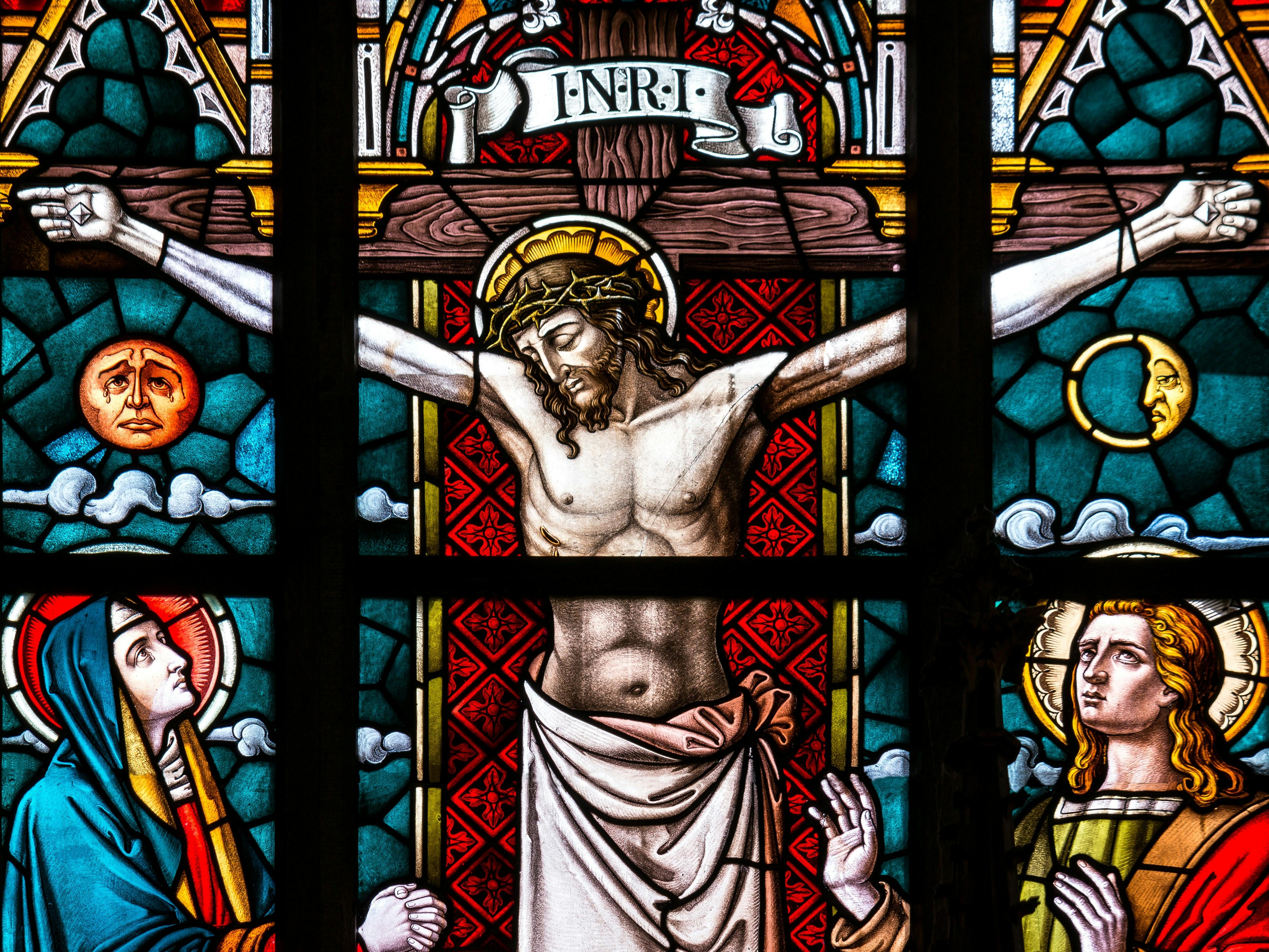
Imagine scrolling through job listings and discovering the CEO position of a big tech company. This would be a dream job for you, but you lack all of the required qualifications. You decide you better keep scrolling. Then, inspiration strikes.
You work up a new résumé, listing CEO roles at Apple and Pixar under “Experience,” and stamping “Steve Jobs” across the header. You may not be qualified for the role, but the founder of Apple certainly is! Your plan works to perfection and you’re invited for an interview, but you know you can’t show up as yourself. They’re expecting Steve Jobs! So you put on a black turtleneck and blue jeans and go to the interview claiming all of his accomplishments as your own.
What kind of company would believe this gimmick? How foolish would they have to be to hire you based on Steve Jobs’s merit? And if they did hire you, wouldn’t that be terrible news? You would be walking into sure failure and shame, and you would likely bring down the company.
Now, if we wouldn’t expect a company to give someone a job based on another’s qualifications, why do we expect God to fall for this ruse?
Popular evangelical author and pastor John MacArthur says this:
This theology is an illusion. It doesn’t reflect reality, but fantasy. The Father pretends that the Sinless One has committed all human sin so every last transgression can be punished in one torturous death. Then, when we appear at the pearly gates, God imagines us in a Jesus costume to admit us into heaven based on qualifications we do not have.
In this gospel, the goal is heaven, and the only requirement is belief in Jesus. Christians should repent and try to live godly lives, but Jesus has already paid for sins and credited righteousness to believers, so we can’t require anything more than faith. Character formation, unfortunately, becomes an add-on to this gospel, and preachers who require it are accused of playing fast and loose with salvation by faith alone.
This mercy may sound like good news, but it has completely abdicated the God-given purpose of humanity. God created humans for royalty:
“God blessed them and said to them, ‘Be fruitful and increase in number; fill the earth and subdue it. Rule over the fish in the sea and the birds in the sky and over every living creature that moves on the ground.’” (Genesis 1:28)
We were made to do a job. Or in the words of Ephesians 2:10, we were “created in Christ Jesus to do good works.” Our role as the Image of God is to “fill the earth” with God’s likeness, to “subdue” creation, and to “rule over” it.
Humans are made to embody God in the world. Psalm 8 reminds us that when God “crowns” humans “with glory and honor” by making them “rulers,” the end result is the majestic Name of God filling all the earth. When we do our job, we fill the world with God as we display God’s Image.
This has always been the goal. Adam and Eve were called to fill the earth, to subdue creation, to rule the creatures. Abraham was called to bless all the nations. Israel was called to bear God’s name to all nations. Jerusalem was called to be the fountain of God’s wisdom for all nations. It’s no surprise, then, that this is also the aim of the gospel:
God conforms humanity to the image of Jesus so we can rule all creation in the way Jesus intends.
The Spirit-empowered “kingdom of priests” (1 Peter 2:9) is transformed into “the light of the world” (Matthew 5:14) to fill the earth with God’s image. This has been the goal since the first page of Scripture! The earth is filled with God’s love until Sin is utterly crowded out. Jesus came “to destroy the works of the devil” (1 John 3:8), to vanquish evil until earth looks like heaven.
Humans have a role to play in this great story. We must “live a life worthy of the calling [we] have received” (Ephesians 4:1) because we have a job to do. If humanity’s purpose was merely to go to heaven when we die, then we could try claiming Christ’s accomplishments as our own. But if humanity’s purpose is to rule in the Kingdom of God, claiming another’s qualifications simply will not work.
“Do not be deceived, God is not mocked; whatever a person sows, this he will also reap.” (Galatians 6:7)
The only way to successfully run a tech company is to have the necessary qualifications of a tech company CEO, and the only way to rule in God’s Kingdom is to be conformed to the image of the King. We need the utter transformation of humanity until we are qualified to preside over God’s creation because we rule it just as Jesus would rule it. The goal of this gospel is “Your Kingdom come, Your will be done, on earth as it is in heaven” (Matthew 6:10).
An exchange of my sin for His righteousness does nothing to accomplish the true goal of the gospel. But there is an exchange that does:
Our life is in Christ, and His life is in us!
Jesus’ gift to me is His very life. Then, in return, I give my life to Him.
We often think of grace as unconditional: God pours out grace with no conditions at all. But the New Testament preaches what John Barclay calls “unconditioned” grace. There is nothing anyone can do to earn grace, and no condition necessary to receive grace. But once this grace has been received, it is then conditional. There are strings attached. God expects a gift in return: our transformed life (though even this is a gift from God!)
“The gift of God is…designed to produce obedient lives that, by a transformative heart-inscription performed by the Spirit, produce what is pleasing to God. This grace justifies the ungodly, but its purpose is not to leave them that way.”
-John Barclay, Paul and the Power of Grace
Empowered by grace and filled with the Spirit, we give up our lives, offering up our bodies as a living sacrifice, and our truest selves are then “hidden with Christ IN God” (Colossians 3:3). I am not just dressed in a Christ costume to get access to heaven. I am “in Christ;” therefore, I am a “new creation!” (2 Cor. 5:17) I am in Christ and He is in me, so “I can do all things through Him who gives me strength” (Philippians 4:13).
When I put off the old self and deposit my life in God, Paul says “I have been crucified with Christ. It is no longer I who live, but Christ who lives in me” (Galatians 2:20). I have given up my life, and the good news is not just that my life is in God, but also that Jesus’ life is in me! When we surrender our lives to God, God conforms us to the image of the Son. Then the Son, through the Spirit, begins to live His life in our lives. For now, we are the only body He has on earth!
There is no gimmick necessary here: I actually become righteous because the righteous One is living His life in my life. As 2 Corinthians 5:21 says, “In Him, we become the righteousness of God.” But this verse also says that “God made him who had no sin to be sin for us.” Isn’t this God looking at the Sinless One and seeing our sin on Him so that we can be treated as if we are His righteousness?
Dr. Andrew Rillera, author of Lamb of the Free, interprets this passage this way: “Human beings can participate in Christ because he first participated in us.” In other words, Jesus became sin for us when He was born “in the likeness of sinful flesh” (Romans 8:3). “God made him who had no sin to be sin” when Christ was born, not when He died. “He first participated in us.”
Then, because Jesus was human like you and me, He died the same death we fear. He didn’t just participate in our life, but in our death, too. But when the Author of Life comes into contact with Death, it spells trouble for Death. Jesus went into Death’s prison and blasted a hole in the wall, liberating any prisoner willing to walk out with Jesus into a new world. When we step out from Death’s dominion and into God’s Kingdom, Jesus breathes His Spirit in us and transforms us. We then participate in Him. Behold! New creation!
When our lives are in Jesus and His life is in us, we aren’t merely credited with righteousness. We actually become the righteousness of God.
This is the way: the narrow path that few can find. Jesus has given us the gift of His life twice: first, by giving up His life on the cross; and then, by inviting us to share in His resurrection life. When someone finds a priceless treasure in a field, they sell all they have to buy the field (Matthew 13:44), and when we receive the marvelous gift of Christ’s life, the only proper response is to bury our old lives with Him, and then to rise with Him to walk in newness of life (Romans 6:4-5).
Our lives are in Jesus and His life is in us. This is the hope of the world.